
Boat detailing is the key to maintaining a vessel because it provides a critical barrier against oxidation, salt corrosion, and UV degradation that structurally weakens fiberglass and upholstery over time. By combining deep decontamination with specialized marine-grade sealants, detailing preserves the hull’s hydrodynamics for better fuel efficiency and ensures the vessel retains its maximum resale value.
Owning a boat is one of life’s greatest rewards, representing freedom on the open water and countless memories with family. However, the marine environment is arguably the harshest setting for any high-value asset. Between the relentless glare of the sun, the corrosive nature of salt, and the biological growth found in freshwater lakes, your boat is under constant siege. This is why professional care isn’t just about looks; it’s about survival for your investment.
The Harsh Reality of the Marine Environment
Boats operate in environments that accelerate wear far more aggressively than roads ever could. Whether you’re navigating coastal waters or spending weekends on inland lakes, the elements are relentless.
Saltwater is one of the most corrosive substances your boat will encounter. It clings to surfaces, dries into crystals, and slowly eats away at finishes and metal components. Even freshwater environments pose serious risks. Minerals, algae, and organic contaminants can stain and degrade surfaces over time.
Then there’s UV exposure. The sun doesn’t just heat your boat; it breaks down materials at a molecular level. Gelcoat fades, vinyl cracks, and protective finishes degrade if left untreated.
The result? Without consistent detailing, your boat begins to lose its shine, its strength, and ultimately its value.
The Core Benefits of Professional Marine Care
To the untrained eye, a boat might look “fine” after a quick hose-down, but the microscopic reality is different. Gelcoat, the outer layer of your fiberglass hull, is porous. Without regular detailing, these pores trap contaminants that lead to “chalking,” a state where the finish becomes dull and brittle. During a recent audit for a client, we discovered that even a single season of neglect could lead to significant gelcoat staining that required heavy compounding to reverse.
Maintenance vs. Neglect: A Comparison
| Feature | Maintained Vessel | Neglected Vessel |
| Hull Surface | Slick, hydrophobic, UV-protected | Chalky, oxidized, porous |
| Fuel Economy | Optimized (low drag) | Reduced (algae/scum friction) |
| Interior Condition | Supple, stain-resistant vinyl | Cracked, moldy, sun-bleached |
| Resale Value | 90–100% of Market Value | 60–75% of Market Value |
This comparison highlights a simple truth: consistent detailing doesn’t just improve how your boat looks; it directly impacts performance and long-term value.
How Boat Detailing Improves Performance
Most boat owners don’t immediately connect detailing with performance, but the relationship is significant.
A clean, polished hull reduces drag in the water. When algae, scum, or oxidation build up, they create resistance. This forces the engine to work harder, increasing fuel consumption and reducing efficiency.
On the other hand, a smooth, protected surface allows your boat to glide more easily through the water. This improves fuel economy, enhances speed, and reduces strain on your engine.
In short, detailing doesn’t just protect your boat; it helps it perform at its best.
Essential Maintenance Steps for Long-Term Protection
Effective boat detailing in Rolesville, NC, involves a multi-stage process that goes far beyond a bucket and soap. Whether you are navigating the coastal waters or spending weekends at the local reservoirs near Raleigh, Knightdale, or Wendell, your maintenance routine should follow a structured path.
- Decontamination: Removing salt crystals and organic “biofilms” that regular washing misses.
- Correction: Machine polishing to remove the oxidized layer of gelcoat.
- Protection: Applying a high-quality polymer or ceramic coating to block UV radiation.
- Interior Detail: Deep-cleaning bilge areas and treating upholstery with UV inhibitors.
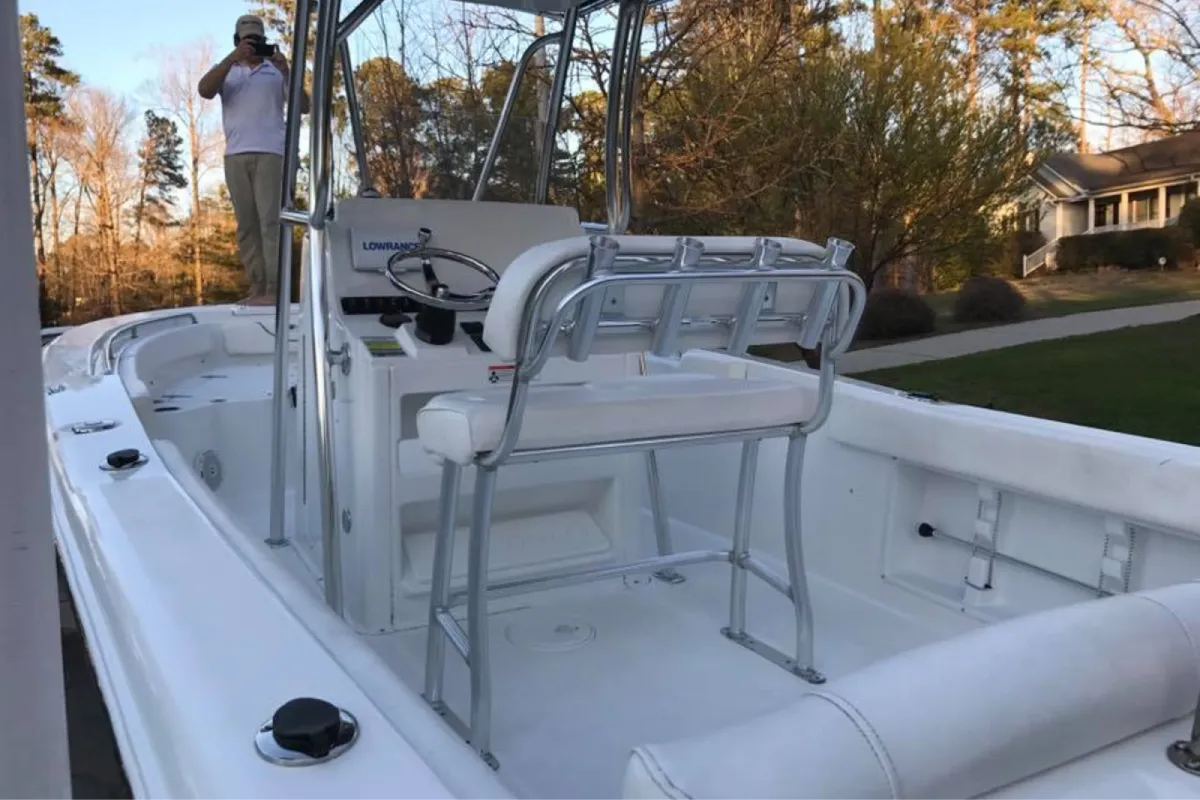
The WashNWerk Standard: Where Marine Care Meets Long-Term Protection
True boat detailing goes beyond surface-level cleaning; it’s a commitment to preserving performance, appearance, and value through a refined, proven approach. Our process is built around delivering consistent, high-quality results that stand up to the harshest marine environments while keeping your vessel looking its absolute best.
We take a comprehensive approach to both interior and exterior care, ensuring every inch of your boat receives the attention it deserves. From deep-cleaning and restoring surfaces to applying high-quality protection, every step is designed to extend the life of your vessel and enhance your overall experience on the water.
What sets this approach apart is a focus on long-term results, not quick fixes. Every service is tailored to your boat’s specific needs, using top-quality products that are carefully selected, locally sourced, and expertly applied. Whether it’s protecting your boat’s exterior from salt, UV, and water damage or maintaining a clean, comfortable interior, the goal is always the same: dependable, lasting care.
With a foundation built on over 20 years of experience, this is a family-owned, quality-driven approach centered on relationships, transparency, and trust. Every detail reflects a commitment to excellence, from customized detailing packages to a customer-focused process that prioritizes your satisfaction at every stage.
The result is simple: a vessel that maintains its value and performance, requires less ongoing maintenance, and gives you peace of mind every time you head out on the water. Because when your boat is protected the right way, you spend less time worrying about upkeep and more time enjoying the journey.
Common Boat Maintenance Misconceptions
Myth: Freshwater boats don’t need regular detailing because there is no salt.
This is one of the most dangerous myths in the industry. While salt is a major corrosive force, freshwater brings its own set of problems. “Lake staining” is caused by tannins and minerals in the water that can permanently dye a white hull. Furthermore, UV exposure is just as intense on a lake as it is on the ocean. Without Rolesville, NC boat detailing, the sun will bake those lake minerals into your gelcoat, making them nearly impossible to remove without aggressive sanding. We frequently help owners who are shocked to find their “lake-only” boat has more oxidation than a coastal cruiser.
Technical Specifications of Marine Coatings
- Gelcoat Sealant: A liquid polymer that bonds to the porous surface of the fiberglass to create a sacrificial layer.
- Marine Ceramic: A 9H hardness coating designed to withstand constant submersion and chemical exposure.
- Vinyl Protectant: A non-greasy UV inhibitor that prevents upholstery from drying out and cracking.
- Metal Polish: Specialized compounds used to restore and protect stainless steel and aluminum brightwork.
For those looking for Rolesville boat detailing, the difference between an amateur job and professional work is the longevity of the shine. A cheap wax might last 3 weeks; a professional-grade sealant applied by an expert will last an entire season.
Protect Your Investment Today
At WashNWerk Detailing and Ceramic Coatings, we believe in excellence with transparency. With years of experience serving the Triangle area, we are your trusted partner in vehicle and marine care. Our long-term protection strategies are designed to give you peace of mind so you can focus on the fun, not the maintenance.
Ready to restore your boat’s shine? Contact us to get a free quote today.
People Also Ask (FAQ)
How often should I have my boat detailed?
For optimal protection, a full detail is recommended twice a year, once before the season begins and once before winter storage. This ensures the gelcoat never remains unprotected for long.
What is the difference between a wash and a detail?
A wash removes surface dirt. A detail involves decontamination, machine polishing to remove oxidation, and the application of long-term UV protection to the hull and interior surfaces.
Does detailing help with fuel efficiency?
Yes. A clean, polished hull reduces drag in the water. When your hull is smooth and free of algae or “chalk,” the engine doesn’t have to work as hard to push the boat through the water.
Can detailing prevent oxidation?
Yes. Regular detailing removes contaminants and applies protective layers that prevent oxidation from forming.
Is ceramic coating worth it for boats?
Absolutely. Marine ceramic coatings provide long-lasting protection against UV rays, water damage, and contaminants, making maintenance easier and more effective.