Professional boat detailing protects gel coat from oxidation and UV damage by removing embedded contaminants and applying advanced chemical barriers that block ultraviolet radiation. Because gel coat is highly porous compared to automotive paint, it readily absorbs oxygen, moisture, and saltwater minerals, leading to a dull, chalky failure known as oxidation. Professional detailing utilizes heavy rotary compounding to level this degraded layer, followed by sealing the open pores with cross-linking polymer sealants or marine-grade ceramic coatings that reflect UV rays and prevent environmental degradation.
Technical Specifications of Marine Gel Coat Vulnerability
Marine gel coat is a specialized, non-structural material applied over fiberglass hulls to provide a smooth, aesthetic finish. Understanding its unique chemical properties highlights why standard consumer protective products fail to preserve it over the lifespan of a hard-working watercraft.
- Porous Thermosetting Polymer Matrix: The chemical composition of marine gel coat contains microscopic pores, making it significantly more absorbent to oxygen and industrial pollutants than automotive clear coats.
- Photo-Oxidative Degradation: The chemical breakdown that occurs when ultraviolet (UV) radiation breaks the molecular bonds within the gel coat resin, converting the smooth surface into a free radical chalky powder.
- Refractive Index Failure: The loss of surface reflection caused by microscopic pitting, which scatters light in multiple directions instead of bouncing it cleanly back to the observer’s eye.
- Hydrolytic Salt-Bonding: The process where sodium chloride crystals wedge inside the open pores of unsealed gel coat, attracting moisture and accelerating structural fading underneath solar heat.
Unlike standard automotive finishes, which feature a thin clear coat layered over a base paint, a vessel’s exterior skin relies entirely on a thicker but highly receptive resin layer. When this resin is left exposed to the elements, environmental factors attack the material’s structure. Solar radiation breaks down the fragile chemical links in the polymer chains. This reaction releases a powdery byproduct that visually manifests as a milky, flat surface. Once this occurs, the hull becomes highly vulnerable to deeper pitting and structural degradation.
Comparing Marine Gel Coat Protection Options
Choosing the appropriate protective coating depends entirely on the vessel’s exposure level, storage environment, and operating conditions. Failing to match the shield to the specific environment means solar degradation will quickly break down the surface defense.
The table below outlines how common marine protectants perform against intense solar radiation.
| Protective Coating Material | UV Block Rating (1-10) | Lifespan in Saltwater Environments | Hydrophobic Contact Angle | Resiliency Against Acidic Marine Scum |
| Traditional Carnauba Marine Wax | 3 / 10 (Low protection) | 30 to 60 Days (Melts in high heat) | ~90° (Moderate water beading) | Extremely Poor (Eats through wax quickly) |
| Polymer Marine Sealant | 6 / 10 (Moderate block) | 4 to 6 Months | ~100° (Good water shedding) | Moderate (Resists light organic acids) |
| SiO2 Marine Ceramic Coating | 10 / 10 (Maximum block) | 12 to 24+ Months | 110° to 115° (Extreme sheeting) | Excellent (Chemical bond rejects scum adhesion) |
Debunking the Myth: “Slapping a Fresh Coat of Marine Wax Over Chalky Gel Coat Re-Hydrates the Gloss”
A pervasive and damaging myth in the boating community is that applying a heavy coat of marine paste wax directly over a dull, chalky hull will “re-hydrate” the dried-out gel coat and bring back its original deep shine. Boaters often look at a dry hull, apply a retail wax that darkens the surface temporarily, and assume the problem has been solved. This misconception is common among those looking into basic boat detailing options in Roseville without realizing the depth of the underlying chemical damage.
In reality, gel coat does not dry out like skin; it has suffered permanent molecular destruction from photo-oxidation. Wax cannot reverse or rehydrate dead, chalky polymer strands. When you slap wax over existing oxidation, you are simply filling microscopic pits with an oily layer of temporary lipids.
Within two or three weekends under intense sun and saltwater exposure, the wax will wash away or evaporate, exposing the exact same chalky surface underneath. To make matters worse, that trapped oxidation acts like sandpaper against the fresh wax layer, causing it to break down even faster than it would on a properly corrected hull. True correction requires mechanical removal of the damaged material, not a cosmetic cover-up.
Applying Our Advanced Surface Standards to Solve This
Restoring and preserving a marine vessel against severe atmospheric conditions requires a specialized team that understands gel coat density, pad rotation acoustics, and chemical curing windows. At WashNWerk Detailing and Ceramic Coatings, we treat every fiberglass correction and marine coating project with absolute scientific discipline, ensuring your boat receives a flawless, high-gloss finish without risking gel coat burn.
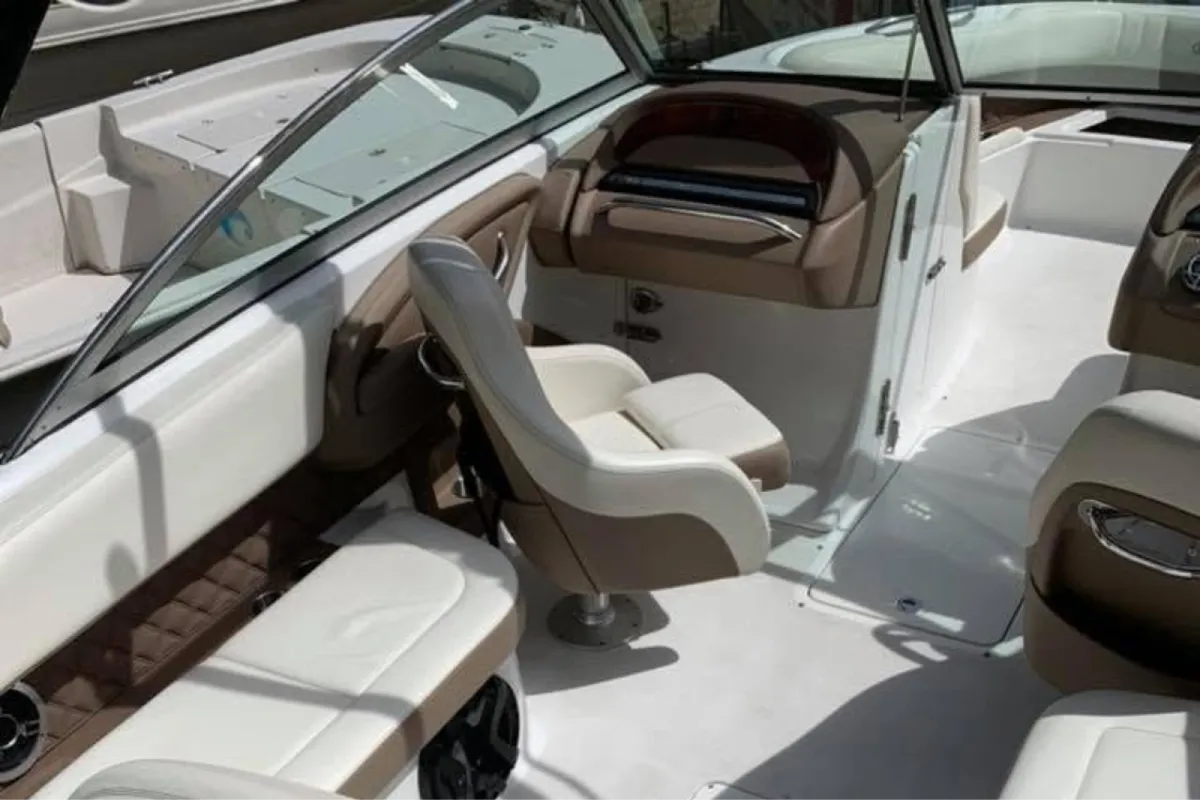
Our entire operational approach centers on providing a reliable pathway to deliver comprehensive interior and exterior detailing for your boat. We specialize in providing a way to protect your boat from the elements with high-quality products through custom detailing packages tailored to your boat’s needs, so you can easily maintain your boat’s value and performance.
When you trust our team, you will enjoy a clean and comfortable interior every time you sail while you safely protect your boat’s exterior from salt, UV, and water damage. We are proudly family-owned, quality-driven, and have been serving Rolesville, nc for over 20 years. Our business model remains focused on building relationships using top-quality products, locally sourced and expertly applied.
We deliver total excellence in vehicle care with transparent service because we believe in long-term protection, not quick fixes. Your client satisfaction is our promise, providing dependable, quality care for your most valuable assets so you can enjoy peace of mind with every service and spend less time on maintenance and more on the road.
Local Environmental Factors and Professional Surface Care
Vessels operating around North Carolina face an aggressive mix of climate challenges that accelerate gel coat failure. High ambient humidity combined with blistering summer heat creates an environmental chamber effect, accelerating the chemical reaction of photo-oxidation. Furthermore, boats operating in inland lakes or trailing down coastal waterways are routinely subjected to high mineral deposits, heavy pollen counts, and acidic organic grime that embeds directly into the porous fiberglass hull.
If you want to establish a real, lasting defense against these regional stressors, securing a high-tier session of Roseville, NC, boat detailing is the most reliable way to clear away deep minerals and lock down true UV blockers. Trying to resolve heavy staining with basic consumer cleaners frequently strips away whatever minimal protection remains, leaving the hull completely bare against solar rays.
For local boaters who expect their vessels to remain sleek and easy to wash, opting for a professional Roseville boat detailing protocol ensures that the delicate balance of mechanical polishing and deep-tissue chemical sealing is managed perfectly. Our industrial extraction and compounding tools lift away the structural impurities that standard washes leave behind.
By prioritizing an expert routine of boat detailing in Roseville, you completely eliminate the cycle of recurring oxidation and fiber degradation. This meticulous preservation simplifies your wash downs, keeps the interior sterile and comfortable, and fully maintains your craft’s premium market value so that you can feel completely relaxed and proud every single time you launch into the water.
Protect Your Investment and Command the Open Water
Restoring and preserving a marine vessel against severe atmospheric conditions requires a specialized team that understands gel coat density, pad rotation acoustics, and chemical curing windows. At WashNWerk Detailing and Ceramic Coatings, we treat every fiberglass correction and detailing process with the utmost care and expertise. Your boat deserves the best protection and maintenance to ensure it remains in prime condition, and we have the tools and knowledge to make that happen.
Bring back that brilliant, deep-reflection showroom shine to your watercraft. As your trusted partner in vehicle care and protection. Contact us today. Let us deliver the durable protection, easier maintenance, and genuine trust your vessel deserves.
People Also Ask
Why does gel coat oxidize so much faster than automotive paint?
Gel coat is significantly thicker and more porous than standard automotive clear coat finishes. These open microscopic pores allow oxygen, UV radiation, and water minerals to penetrate much deeper into the resin matrix, accelerating the breakdown of chemical bonds and creating a dull, chalky residue that ruins the finish.
Can I use standard automotive wax or polish on my boat’s hull?
No, automotive waxes and polishes are not formulated to handle the density of marine gel coat. Automotive clear coats are thin and hard, whereas marine gel coat requires much heavier cutting abrasives, specific lubricating oils, and chemical solvents engineered to break down tough marine oxidation without marring the underlying fiberglass.
How often should a boat be professionally detailed to completely prevent oxidation?
To maintain maximum UV defense, a boat should receive a professional exterior detail at least twice a year, once before launching for the season and once prior to winter storage. For vessels kept in the water year-round or under intense southern sun exposure, quarterly maintenance yields the best protection.
Will professional compounding weaken my boat’s fiberglass structure?
Not when performed by certified professionals. Gel coat is applied relatively thick during manufacturing. Professional compounding only removes a microscopic layer of dead, oxidized material, leaving the structural fiberglass completely untouched and perfectly safe.